Why Compare Several Quantity Tiers for One Gift Box?
A single quantity gives you one price. Comparing several quantities against the same specification helps you understand what changes with volume—and what does not.
When planning a launch, it is tempting to ask for the lowest unit price first. But a per-box figure on its own cannot show the full decision. A larger run may spread some fixed preparation costs across more boxes, while also tying up more cash and inventory. A smaller run may be easier to manage, even when its unit price is higher.
The useful question is not simply “Which quantity is cheapest?” It is “What does each quantity cost for the same packaging, delivered on the same basis, and what commitment does that quantity require?”
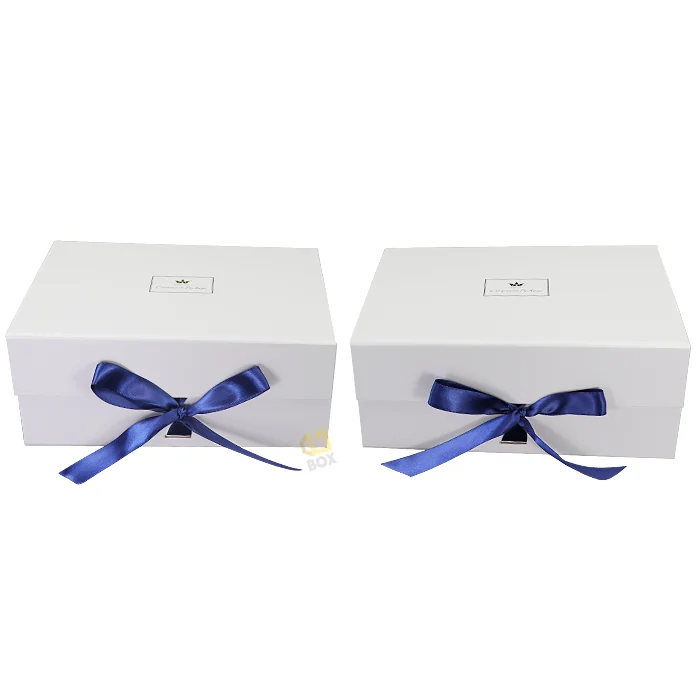
A buyer inquiry that called for quantity tiers
A French wellness brand buyer asked about one foldable magnetic gift-box concept, with quantities ranging from an initial launch or trial to a substantially larger batch. The inquiry requested more than a unit price: sample cost, lead time, freight, carton dimensions and customization details were also part of the planning.
The proposed set included soft goods, bottled products and a card. That mix made the insert and flat-pack delivery relevant to the quote. A box price without those details would leave important parts of the packaging and logistics comparison unanswered.
Case note: This anonymized example reflects the questions in a recorded inquiry. It does not imply that an order was placed, production was completed, or a particular saving was achieved.
The lesson applies to many custom packaging projects: quantity is only one input. The specification and delivery assumptions need to stay visible beside every quoted tier.
What quantity tiers can tell you
They show how fixed costs are distributed
Some project costs are incurred during preparation rather than repeated in exactly the same way for every box. Depending on the chosen design and process, these may include sample development, tooling, or setup. When a quote separates those charges from the per-unit amount, you can see how the overall budget changes as quantity changes.
Ask the supplier to state which charges are one-time, which are charged per unit, and which depend on the chosen option. Do not assume every project has the same setup items or that a quoted sample charge will be credited against production.
They help balance unit price against inventory exposure
A higher quantity can sometimes lower the quoted unit price for an unchanged specification, but it also means committing to more packaging at once. Consider your launch forecast, storage capacity, cash allocation, product shelf life if relevant, and whether the design or product assortment may change. These practical constraints matter alongside the per-box figure.
They make shipping and carton planning easier to compare
Ask for packed carton dimensions and gross weight where available, along with the shipping basis and destination used for each tier. The number of cartons and shipment volume may change with quantity. Compare delivered estimates on a consistent basis and keep freight distinct from packaging production cost so the difference is easy to explain.
Keep the specification constant across tiers
Build one shared description of the finished gift box and ask for each quantity to be priced against it. For a foldable magnetic gift box, the comparison may need to record:
| Specification | Keep consistent across tiers | Clarify if undecided |
|---|---|---|
| Structure and dimensions | Foldable or assembled format, opening style, and agreed inside/outside dimensions. | Which dimensions are provisional and how the structure may change. |
| Board and wrap | Board type or agreed construction, wrap material and color. | Supplier alternatives should be listed as separate options. |
| Printing and finish | Artwork version, print coverage, logo placement and surface treatments. | Mark finish and artwork assumptions that still need approval. |
| Insert and contents | Layout for soft goods, bottles and card; insert material and compartments. | Confirm product dimensions and any protection or fit requirements. |
| Packing and delivery | Flat-pack or assembled packing method, destination and shipping scope. | Show sample, freight and other charges separately where applicable. |
If a supplier proposes a different insert, removes a finish, changes the dimensions, or switches from flat-pack to assembled delivery in one tier, label that as a separate design option. It may be a useful alternative, but it is not a like-for-like quantity comparison.
A practical way to compare the quotes
Put the totals and assumptions into one table. The figures should be supplied by the manufacturer; this template avoids guessing unit prices or freight.
| Quote item | Trial quantity | Mid-range quantity | Larger quantity |
|---|---|---|---|
| Box specification / revision | Same agreed version | Same agreed version | Same agreed version |
| Sample / development charge | List separately | List separately | List separately |
| Production unit price × quantity | Supplier quote | Supplier quote | Supplier quote |
| Packing and carton details | Cartons, dimensions, weight | Cartons, dimensions, weight | Cartons, dimensions, weight |
| Freight to the same destination | State method and estimate | State method and estimate | State method and estimate |
| Estimated delivered total | Production + applicable charges | Production + applicable charges | Production + applicable charges |
| Lead time and assumptions | State basis | State basis | State basis |
Use the delivered total to understand the budget for each option, then calculate the effective cost per usable box if the quoted scope includes different one-time or shipping charges. Keep taxes, duties, or other destination-specific charges in view if they are excluded from the supplier’s estimate. Confirm the final basis with the supplier before treating estimates as a landed cost.
Common mistakes when comparing custom box prices
- Comparing different designs as if only quantity changed. A changed insert or finish can explain a price difference. Record specification changes in a separate column.
- Looking only at unit price. Sample, setup, packing and freight may affect the total budget. Ask how each is treated.
- Using different delivery assumptions. Compare the same destination and clarify whether the quote includes freight, duties, or delivery to a particular location.
- Assuming the sample and production scope match automatically. Confirm what the sample is intended to verify and which approved specifications will carry into production.
- Choosing a quantity before considering the launch plan. Evaluate storage, forecast confidence, cash flow and possible design changes alongside unit cost.
Copy-ready request for a tiered quote
Send one brief and request multiple quantities
- Product dimensions and items in each gift set
- Preferred box structure and inside dimensions
- Insert layout for soft goods, bottles and card
- Board, wrap, color, print and finish requirements
- Current artwork or reference images
- Flat-pack or assembled delivery preference
- Two or three quantity tiers for the same specification
- Sample and any development/setup charges listed separately
- Lead-time basis for sampling and production
- Carton dimensions, packing details and shipment weight
- Destination and shipping method for freight estimates
- Open assumptions or alternative designs clearly identified
You do not need to have every detail finalized before starting a conversation. Mark what is confirmed, what is provisional, and where you want a supplier’s recommendation. That way, each quantity tier can be updated against the same brief as decisions are made.
Frequently asked questions
Why should I request several quantity tiers?
Several tiers show how the quoted project budget and unit price change with volume. They are most useful when each tier uses the same box specification and the quote separates production, sample or setup charges, and delivery.
How many quantities should I compare?
Two or three realistic options are usually enough to support an initial decision. Choose quantities that reflect a plausible launch plan and ask the supplier to use the same specification for each.
Does a larger order always have a lower unit price?
Not necessarily. Pricing depends on the specification, materials, production method and other quote assumptions. Ask the supplier to explain differences and keep any changed design as a separate option.
Should shipping be included in the comparison?
Yes. Request carton details and freight estimates to the same destination, while keeping freight separate from the packaging price. Confirm what duties, taxes or other charges are excluded.
Can my box design change between quantity tiers?
It can, but identify each design as a distinct option. If structure, insert, finish or packing method changes, the quote no longer isolates the effect of quantity alone.
Compare your box options.
Share your box specification, product layout, quantity tiers and delivery destination for a clearer custom packaging quote.
→ Request a Custom Quote